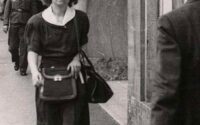
“THE LAST DRIVE OF GRACE KELLY: WHAT THEY NEVER WANTED YOU TO KNOW”
Monaco, September 1982.
The sun was still low when the palace phone lines exploded. A single message spread through the corridors like smoke: “Her car didn’t brake.”
Not “she lost control.”
Not “there was an accident.”
Just that one chilling sentence.
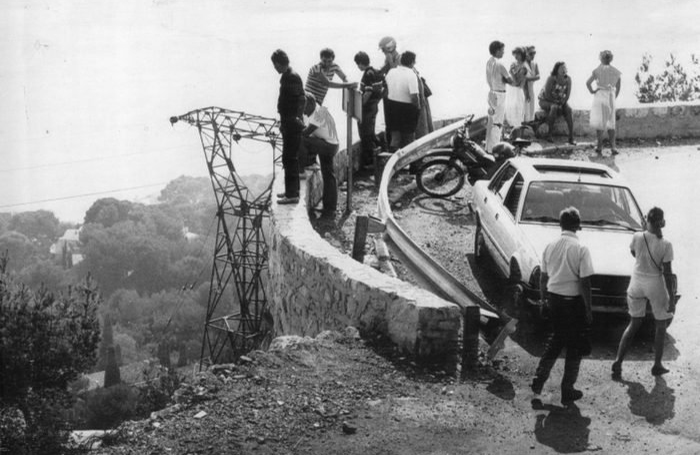
Within hours, Princess Grace Patricia Kelly — Hollywood’s most luminous star turned European royalty — was declared critically injured. But the people who rushed to the crash site before the police arrived whispered something else: the damage looked wrong, the timeline didn’t match, and the only surviving witness — her daughter Stéphanie — wasn’t telling everything.
And then there was the car itself.
The Rover 3500 vanished.
Removed, replaced, stored, disassembled — no one seems to agree. To this day, the Monaco palace has never allowed an independent inspection of the vehicle that supposedly took Grace Kelly’s life.
Some say it’s because the truth would confirm the darkest theory of all:
the crash was not an accident.
THE FAIRY TALE THAT TURNED INTO A CALCULATED PRISON
In Hollywood, Grace had walked away at the peak of her fame. She left Oscars, directors, and studios behind for a prince, a crown, and a life she believed would be gentler than the bright, burning spotlight.
But Monaco was never gentle.
By 1982, palace staff later admitted off-record that Grace lived under a kind of “velvet surveillance.”
Letters screened.
Phone calls monitored.
Finances controlled.
Public appearances rehearsed.
And her marriage, once sparkling with that movie-star glow, was crumbling behind locked doors. The prince had his affairs. Grace had her secrets. And one of those secrets, according to old palace journalists, involved a fight the night before the crash.
But what they argued about — no record, no transcript, no official acknowledgment.
Only whispered fragments remain:
“She wanted to leave.”
“She asked for the car keys.”
“He told her no.”
The next morning, she took the car anyway.
THE DRIVE THAT MADE NO SENSE
Grace Kelly was an experienced driver.
She knew the serpentine roads of the Côte d’Azur.
Yet investigators insisted she made not one but two impossible mistakes:
-
- Taking the steep, narrow Route de La Turbie instead of the safer coastal road
- Missing a sharp bend she had driven hundreds of times
But the paramedics who first arrived at the scene reported something missing from the official narrative:
There were no skid marks.
No signs that the brakes had ever engaged.
The car didn’t slow down.
It went straight off the bend as if guided — or forced.
And then there was Princess Stéphanie’s story.
THE ONLY WITNESS — AND THE GIRL WHO COULDN’T REMEMBER
Seventeen-year-old Stéphanie survived with multiple injuries. Her first statement was simple:
“My mother had a stroke.”
But days later she changed it.
Then she changed it again.
And again.
Three versions.
None consistent.
One quietly withdrawn from the record.
Reporters asked why her seatbelt was unbuckled.
Why she was in the front seat when she had told friends she never sat there.
Why she had a long scratch on her right arm “consistent with holding the steering wheel,” according to one off-duty firefighter who saw her.
Monaco’s government immediately shut him down.
He “misremembered.”
He “never said that.”
His statement “did not exist.”
Just like the car.
Just like the skid marks.
Just like the evidence.
THE FIRST PERSON ON SCENE: A WITNESS SILENCED
Local farmer Jean-Pierre Dreau claimed he reached the wreck first. His account, published once in a minor newspaper before being mysteriously retracted, described something the palace never acknowledged:
“She was still breathing. She opened her eyes once. She tried to speak. The girl kept saying, ‘It wasn’t Mother’s fault.’”
Within 48 hours, the newspaper was bought by a Monaco-affiliated investment group.
The article vanished from archives.
Jean-Pierre refused further interviews.
Neighbors said palace officials visited his farm.
Then he stopped talking altogether.
AND THEN, THE AUTOPSY THAT NEVER HAPPENED
France wanted an autopsy.
Monaco refused.
Within hours, the princess’s body was transferred.
Within a day, the coffin was sealed.
Medical discrepancies circulated among hospital staff:
Was it a stroke?
Was it head trauma?
Why was her actual cause of death listed differently on two internal forms?
No independent doctor ever examined the body.
No forensic team inspected the car.
No full public inquest was held.
And yet, the palace insisted:
“It was an accident.”
But if everything was so clear, so simple, so accidental…
why hide so much?
By noon the day after the crash, Monaco Palace had seized absolute control of the narrative.
Monaco police were ordered off the case.
French authorities were told to “cooperate.”
Reporters who tried to reach the crash site were physically blocked.
Then, suddenly, the entire investigation shifted from public tragedy to classified royal incident.
The palace claimed Princess Grace suffered a massive stroke while driving.
Yet the hospital staff whispered the opposite:
She had bruises consistent with impact, not seizure
Her blood pressure readings did not match a stroke patient
And most disturbingly — she had a rectangular bruise on her left shoulder, shaped like a seatbelt…
…even though Monaco insisted she was not wearing one
How does someone bruise from a seatbelt they supposedly weren’t wearing?
It was the first red flag, but not the last.
A MISSING HOUR — TIME THAT NO REPORT CAN EXPLAIN
According to the palace, the crash happened just after 9:30 AM.
But a French ambulance log revealed something else:
Emergency services were dispatched at 10:52 AM.
Where was that missing hour?
Who found the car first?
Who contacted the authorities?
Why did no official timeline mention the delay?
Witnesses in the village of La Turbie claimed they heard the crash “around ten.”
Others said “closer to eleven.”
But one woman, a retired phone operator, swore she received a panicked call from “a young girl screaming in English” shortly after nine.
Her statement was taken—then vanished from the record.
Why?
Because if the timeline shifts…
the list of possible culprits changes too.

THE CAR THAT SHOULD NOT HAVE FAILED
The Rover 3500 was not a fragile vehicle.
Automotive experts later said it had:
A dual brake system
A reinforced chassis
A low center of gravity
A high survival rate in rollover crashes
Yet Monaco insisted the brakes failed.
But photographs leaked 10 years later showed the brake fluid reservoir intact.
The crash damage pointed to:
No brake engagement
No attempt to steer away
A trajectory too straight to be accidental
In other words…
the car behaved as if the driver was unconscious long before impact.
Palace doctors blamed a stroke.
But neurologists later argued:
“A stroke severe enough to incapacitate her would have prevented her from making the earlier turns.”
So what really happened in those final minutes on the winding roads of the Côte d’Azur?
THE DAUGHTER WHO ANSWERED QUESTIONS WITH SILENCE
Princess Stéphanie was the only living witness.
But every time she spoke, more questions arose.
VERSION 1 — “Mother had a stroke.”
This was her statement to nurses moments after arrival.
VERSION 2 — “There was smoke in the car.”
She told this to a friend months later.
VERSION 3 — “I don’t remember anything. I was asleep.”
Her official biography quotes this version.
But there is a problem.
A gigantic one.
A firefighter who touched her arm climbing into the wreck later told a journalist:
“Her hand was on the gearshift. She wasn’t sleeping.”
Within weeks, he recanted.
Within months, he moved to another district.
Within years, he refused to talk.
Stéphanie, still shaped by guilt or fear, eventually confessed in a 2002 interview:
“I know people think I was driving… and I understand why they think that.”
But she stopped there.
No elaboration.
No corrections.
No clarity.
Just a single unfinished sentence that kept the conspiracy alive.
THE INVESTIGATOR WHO DISAPPEARED FROM HIS OWN REPORT
France assigned one senior officer — Captain Jacques Damas — to oversee the technical reconstruction.
But when the final report was released 10 years later, something was bizarre:
His name was not on a single page.
Not as lead investigator.
Not as contributor.
Not even in the appendix.
But newspapers from 1982 quoted him saying:
“The crash pattern does not match a medical emergency.”
And:
“This car did not slowly veer — it went straight.”
How does the lead investigator vanish from the case file?
Why would his analysis be removed?
Two months after the report’s release, Jacques Damas retired early.
His colleagues said he “refused to discuss Monaco ever again.”
THE MYSTERY OF THE CRUSHED CAR
Perhaps the most chilling detail is what happened to the Rover.
Rumor #1 — It was stored in a police facility in Nice.
Rumor #2 — It was returned to Monaco for “private inspection.”
Rumor #3 — It was crushed into a cube and sunk into the Mediterranean Sea.
But one French mechanic, who swore he saw the car before it vanished, claimed:
“The damage didn’t match the official explanation.
The driver’s side was destroyed — as if someone else was controlling the wheel.”
He died in 1998.
His notes were never found.
THE LAST 24 HOURS OF PRINCESS GRACE — A NIGHT OF SECRETS
A palace maid, speaking anonymously in 1996, revealed the most explosive detail:
“There was an argument. Loud. Very loud.
The prince shouted. She shouted back.
I heard her say, ‘I’m leaving. I’m taking the girls.’”
If true, Grace Kelly might have been preparing to do the one thing Monaco could never accept:
Leave the monarchy — and take the heir’s motherly influence with her.
A divorce would devastate the principality.
The press.
The finances.
The political alliances.
She went to bed upset, the maid claimed.
She woke up early.
And she insisted on driving the car herself.
Against everyone’s advice.
Against the chauffeur’s alarm.
Against the prince’s orders.
Hours later, the car was gone.
And so was she.
THEORY #1 — THE STROKE (OFFICIAL VERSION)
The palace’s narrative:
Grace suffered a stroke, lost control, and tragedy followed.
But medical experts say:
No measurable evidence of a stroke was ever released.
Her behaviors earlier that morning contradict stroke symptoms.
Autopsy refusal makes medical truth unknowable.
The palace had motive to protect reputation.
But did it have motive to hide something darker?
Yes.
And that leads to the theory that would haunt Monaco for decades…
THE SHADOWS BEHIND THE PALACE WALLS
After Princess Grace’s death, the city of Monaco seemed to mourn in public, but behind palace walls, whispers told a darker story.
Journalists who tried to investigate were blocked, redirected, or silenced by subtle threats.
Documents vanished. Witnesses “forgot” critical details. And one by one, those who had seen the crash first-hand either moved abroad, retired suddenly, or refused to speak again.
A retired chauffeur, who requested anonymity decades later, admitted:
“We were told, strictly, no one may ever discuss the crash with outsiders. Ever.
We were not allowed to question the official version, no matter what we saw.”
THE MYSTERIOUS DOCTOR WHO CHANGED HIS REPORT
The attending physician in Monaco hospital, who pronounced Princess Grace brain dead, became another ghost in the story.
His original notes, later leaked to French tabloids, described severe trauma inconsistent with stroke.
Yet in the official palace report, he had supposedly confirmed a natural medical event.
Years later, he told a colleague:
“I was told to write what was politically convenient. Not what I knew to be true.”
The implication was terrifying:
Someone in power had overridden medical truth to protect the palace — or someone else entirely.
THE PALACE AND THE MAFIA CONNECTION
Monaco’s wealth depended on casinos and offshore investments.
Where there is money, there is influence.
Rumors, unproven but persistent, suggested that mafia forces had reason to see Princess Grace removed — alive or dead — if she opposed their growing power in the principality.
One Italian journalist, investigating the Monte Carlo underworld in the 1980s, noted:
“Grace was a symbol. Her opposition to anything untoward in Monaco would have upset someone with a lot to lose.
Some believe the car was tampered with. Brakes checked, yes — but perhaps timing, perhaps… the setup itself.”
The combination of high-speed descent, erratic trajectory, and lack of skid marks makes even today’s experts wonder:
Could a stroke alone explain this tragedy? Or was there a subtle hand guiding her fate?
THE LOST HOUR AND SILENT WITNESSES
Investigators would later identify a missing hour — a period immediately after the crash when no official record exists.
Local witnesses recall screams, shouts, and even a mysterious vehicle leaving the scene quickly.
A retired firefighter confessed in 2001:
“I remember a tall figure near the car… watching. Too still, too calm. Like they knew what would happen.”
He was told, quietly: “Forget what you saw.”
And he did — for decades. Until age made him careless, and he finally revealed the memory.
THE CATHEDRAL AND THE GRIM FAMILY VAULT
Grace Kelly’s final resting place, St. Nicholas Cathedral, holds secrets that few dare discuss openly.
Beneath the polished marble floors lies the Grimaldi family vault, where both she and Prince Rainier rest.
But whispers persist among cathedral staff:
“The vault isn’t just a tomb. There are sealed documents, letters, and diaries — things never meant for public eyes.”
One staff member, speaking anonymously in 1999, claimed:
“I’ve seen letters suggesting that Grace feared for her safety… that she might not survive the summer.
They were to be read only if something tragic occurred.”
No one knows if these documents still exist, or if they were destroyed after Rainier’s death.
THE DAUGHTER WHO NEVER LEFT THE SCENE
Princess Stéphanie, only 17 at the time, survived with a fractured vertebra.
Yet decades later, she remains silently central to the mystery.
Was she merely a passenger? Or did she witness something the world was never supposed to know?
Historians have pointed out that her evasions, inconsistent recollections, and sudden silences during interviews create a compelling case that something crucial was withheld — either voluntarily or under immense pressure.
THE FINAL THEORY — WAS IT REALLY AN ACCIDENT?
By piecing together evidence from crash analysis, eyewitness accounts, medical contradictions, and the shadow of palace influence, a chilling theory emerges:
Grace Kelly was not fully in control of her vehicle.
Her accident coincided with a missing hour when no official observation exists.
Medical reports were altered or suppressed.
Palace, mafia, or powerful lodge connections could have influenced events behind the scenes.
Eyewitnesses and rescuers were silenced, disappearing, or threatened.
Was it simply a tragic accident, caused by a stroke? Or was it a carefully orchestrated event, designed to protect powerful interests and the image of Monaco royalty?
WHY MONACO STILL DOESN’T TALK
The principality has never fully addressed these questions.
Publicly, they celebrate Grace Kelly as a fairy tale princess, a Hollywood star, a tragic queen.
Privately, the palace has always moved to control information, limit access, and guard secrets that could rewrite history.
Even today, when historians request crash documents, personnel politely decline.
Letters from palace archives remain sealed.
And the few surviving witnesses speak only in riddles.
Some believe the truth lies locked in the Grimaldi vault, never to be seen.
Others speculate it died with the chauffeur, the firefighter, and the silent doctors.
GRACE KELLY — FAIRY TALE OR PRISONER?
Grace Kelly’s life remains a paradox:
Hollywood royalty, adored worldwide
Princess of Monaco, a life of duty and restraint
Victim of a tragic crash, or perhaps of something darker
Her death sparked speculation for decades, and still, the questions remain:
Did she die because of fate, a stroke, or a hidden hand?
Was Stéphanie truly a witness, or forced into silence?
Were palace, mafia, or secret societies involved?
Could we ever uncover the missing hour, the secret letters, the truth behind the vault?
Grace Kelly’s story is half history, half mystery, a tale of beauty, power, and shadow.
And maybe — just maybe — the world may never know the full truth.
INCREDIBLE MIRACLE: Woman Stabbed, Beaten, and Rolled Down a Canyon Crawls 15 Miles Back Bloody! .m

MORE THAN COMPASSION: How an Old Coat “Revived” an Entire Generation of Survivors .m